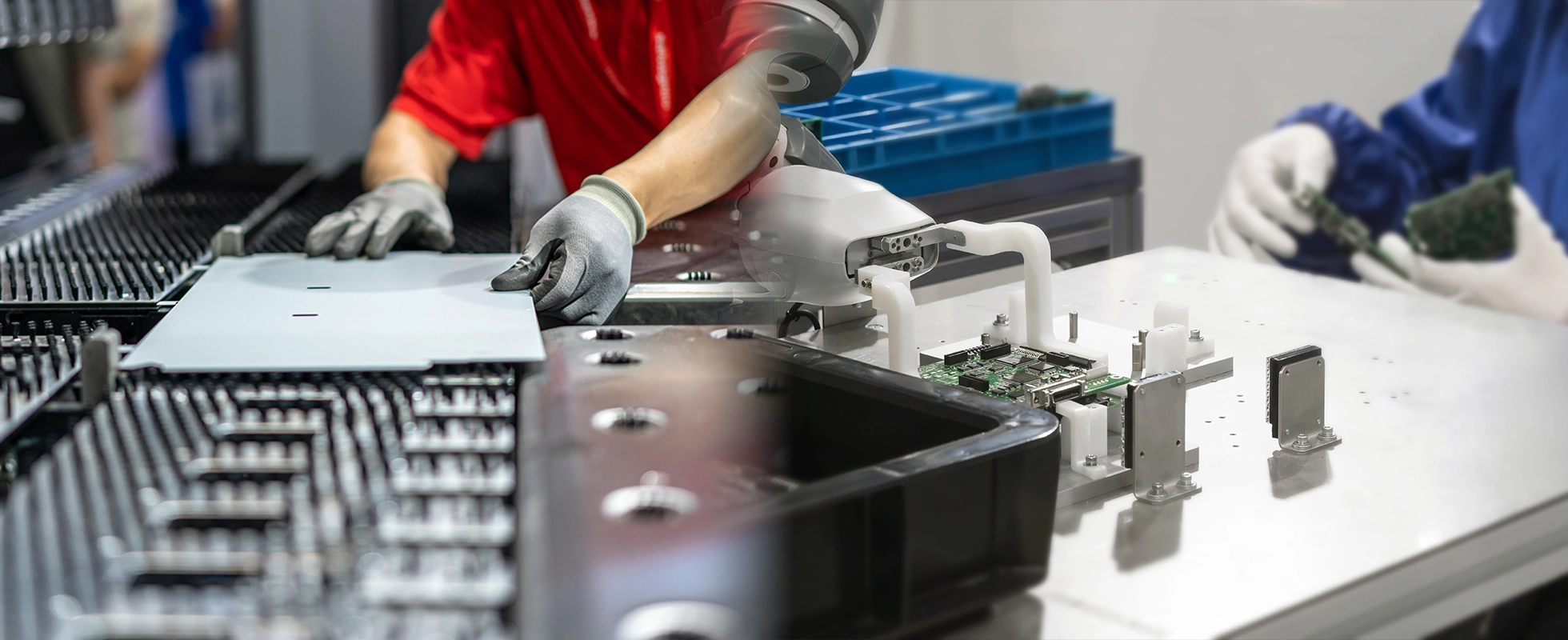
The products could hardly be more different. On the one hand: highly complex electronics manufacturing involving thousands of components, manual assembly processes, and short product lifecycles. On the other hand: contract metalworking using milling machines, turning centers, setup procedures, and bottleneck equipment.
And yet, both industries struggle every day with exactly the same problem: How do you coordinate limited resources in the face of constant change? In many companies, the answer is still: Excel, ad-hoc instructions, and gut feelings. And that is precisely what is increasingly becoming a competitive disadvantage.
Production Planning in Practice: The Reality on the Shop Floor
In reality, most production schedules look something like this:
- Multiple Excel files
- Shift supervisors manually adjust the order
- Priorities are constantly changing
- Planning depends on a few key individuals
- The “real plan” often exists only in the minds of experienced employees
This works for a surprisingly long time—until complexity increases. And that is exactly what is happening right now in nearly all manufacturing sectors, particularly in electronics and metal production. So it’s no coincidence that most PAILOT customers come from these two industries.
EMS and Metal Fabrication: Why the Challenges Are Virtually Identical
At first glance, the two industries seem completely different. Operationally, however, they are remarkably similar.
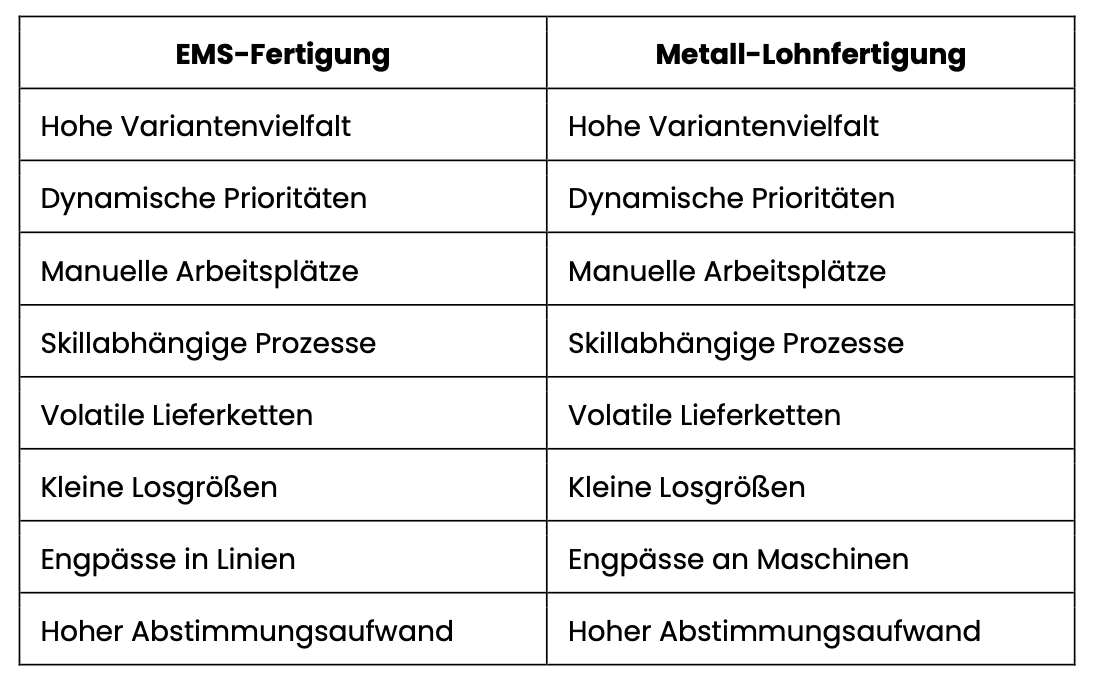
Industries are grappling with the same fundamental question: Which orders should be produced—when, where, and by whom—to ensure that overall production runs optimally? And that is precisely where manual planning approaches reach their limits.
Manual production planning is becoming a competitive disadvantage
Just a few years ago, markets were much more static, and so was production planning. That has changed as customer expectations regarding delivery reliability have risen and procurement processes have become more complex. In addition, conditions on the shop floor change by the minute. Machines break down, staff are absent, materials are delayed, and rush orders come in.
The production plan is therefore no longer a static document, but rather an ongoing optimization problem.
Nevertheless, many companies continue to try to manage this dynamic manually, which leads to unnecessary setup procedures, long lead times, declining on-time delivery rates, and increased stress on the shop floor.
AI-Based detailed scheduling: How Modern Production Control Manages Complexity
With PAILOT, production is viewed as a dynamic, integrated system. The AI-based algorithm continuously evaluates aspects such as:
- Machine Availability
- Skills and Personnel
- Material Availability
- Delivery Dates
- Customer Needs
- Assembly States
- Bottlenecks
- alternative jobs
And, at the push of a button, it dynamically calculates the best sequence based on that. This produces effects that are virtually impossible to achieve manually:
- shorter setup times
- higher utilization
- less idle time
- better on-time delivery
- more stable processes
The key competitive advantage of the future lies in production planning
Machines are becoming more comparable, automation is becoming more accessible, and technology is being standardized. The real competitive advantage is increasingly found elsewhere: in the ability to intelligently and efficiently orchestrate complexity and dynamics. That is why detailed scheduling is evolving detailed scheduling operational support process into a core strategic competency. And that is precisely why Excel is no longer sufficient for this task.