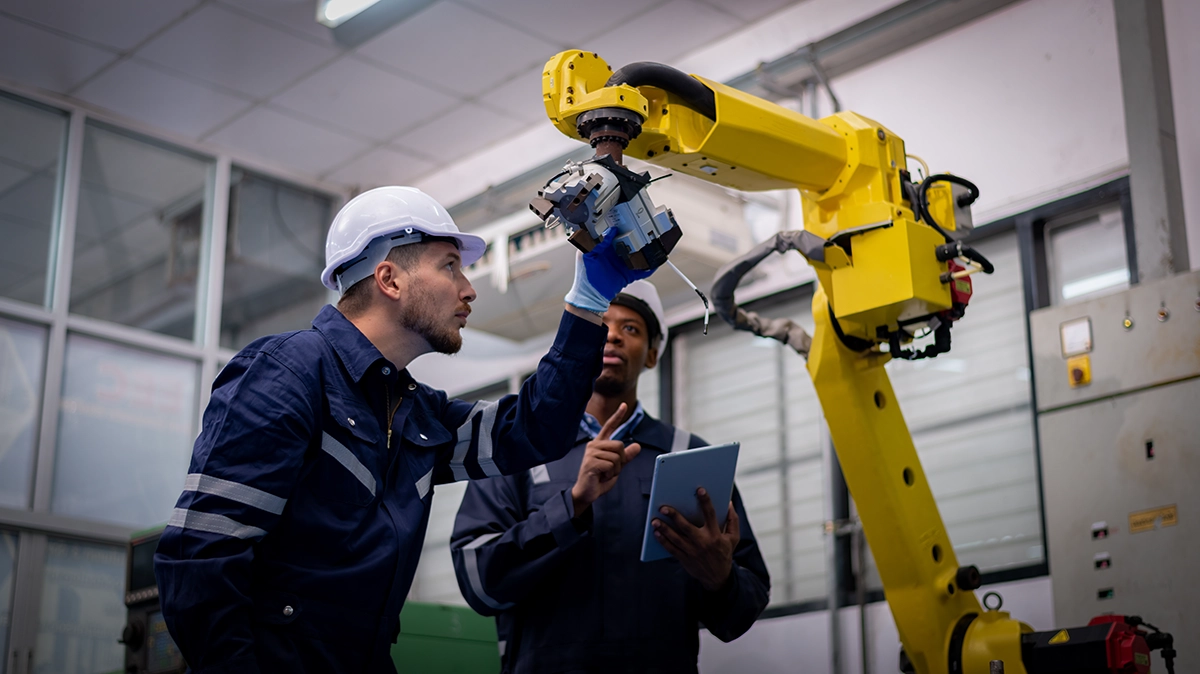
In modern production planning, changes are part of everyday life: machines break down, customer orders change at short notice, materials are delayed in the supply chain. At the same time, customers expect high delivery reliability, and on the shop floor, calm, clarity, and reliability are crucial for efficient processes.
This is precisely where the importance of stable yet flexible production planning becomes apparent. Stable production plans form the foundation for resilient, efficient, and sustainable production planning.
What does stability mean in production planning?
A stable production plan remains largely constant despite necessary adjustments to current events, especially with regard to promised delivery dates.
In production planning, stability means:
- Minimization of short-term plan changes
- Compliance with confirmed delivery dates
- Continuity in the planning process
- Relieving the burden on shop floor management
The aim is to make necessary adjustments without permanently realigning the entire production plan. This is because every major change to the plan creates coordination effort, uncertainty, and potential inefficiencies.
Conflicting goals in production planning: flexibility vs. stability
Professional production planning must respond to new conditions on a daily basis:
- Deviations in production progress
- machine failures
- urgent orders
- material shortages
This creates a classic conflict of objectives in production planning: The production plan must be flexible—but it cannot be completely overturned with every change.
If the plan is changed too often, the following will occur:
- Uncertainty on the shop floor
- Increased communication effort
- Postponements
- Declining planning reliability
Effective production planning therefore requires mechanisms to balance stability and responsiveness.
The frozen zone as a tool for stable production planning
A proven tool in production planning is the so-called frozen zone. This is a defined period of time during which no changes, or only specific changes, may be made to the production plan.
Advantages of the frozen zone in production planning:
- Protection against short-term schedule changes
- Greater security in production control
- Greater transparency for shop floor management
However, the frozen zone primarily stabilizes the short-term time horizon. Medium- and long-term production planning remains susceptible to instability, especially when each new optimization results in completely new delivery dates.
AI-supported production planning with APS systems
Traditional, rule-based systems quickly reach their limits in modern production planning. They often optimize in isolation based on key figures such as throughput time or capacity utilization, without sufficiently considering the stability of the existing plan.
Modern APS (Advanced Planning & Scheduling) systems are therefore increasingly relying on artificial intelligence in production planning.
AI-supported production planning has two key objectives:
- Maintain existing delivery dates where possible
- Do not cause any additional delays
The AI continuously analyzes current production data, capacities, and procurement situations. New orders are integrated in a second planning phase in such a way that existing processes are affected as little as possible. The result: production planning that is both stable and responsive.
Why stable production planning is a competitive advantage
Stable production planning has a direct impact on a company's performance:
- Greater adherence to deadlines
- Fewer operational disruptions
- Reduced coordination effort
- Greater transparency in manufacturing
- Better planning for employees and partners
Intelligent production planning is becoming a strategic success factor, particularly in the context of Industry 4.0 and smart factories. Companies that systematically combine stability and flexibility secure long-term competitive advantages.